About Peel
Named for the animal that resists cancer.
“Peel” comes from פִיל, the Hebrew word for elephant. Our science began with a question about why these enormous, long-lived animals so rarely develop cancer, and it has not stopped there.

פִיל · pronounced peel — Hebrew for elephant
The origin story
We build on 100 million years of evolutionary genomics.
Most drug discovery begins with a potential target and hunts for a molecule. Peel begins with biology that already works — in the clinic, or in another species — and engineers out the reason it falls short. Two programs, two starting points.
A validated target, carried by a better molecule.
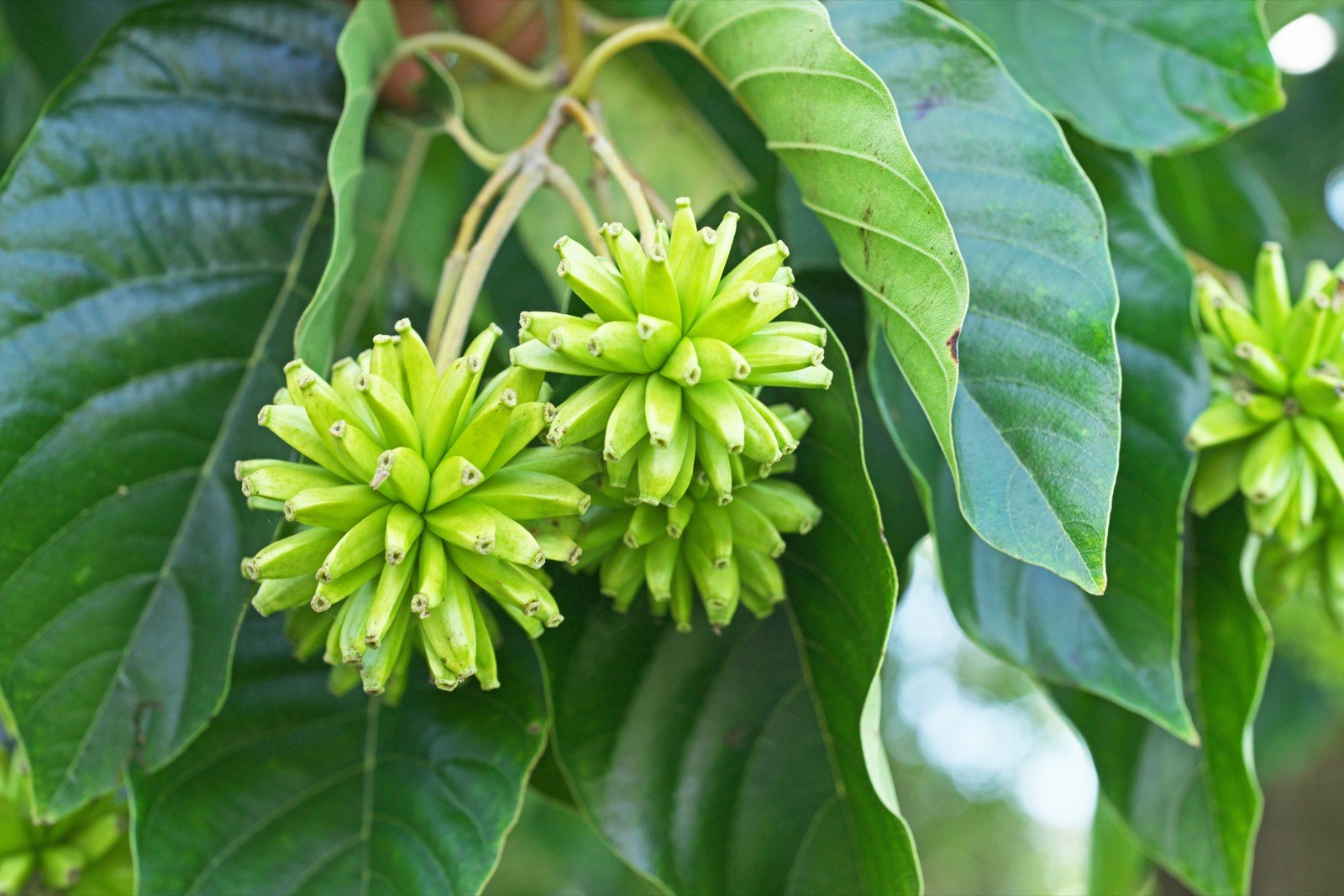
Camptothecin, from the Chinese Happy Tree, gave oncology its first topoisomerase I inhibitors. Irinotecan proved the target works — then showed its limits: it needs liver activation, tumor cells pump it out, and the gut reactivates it into dose-limiting toxicity.
Peel kept the mechanism and replaced the molecule. SN22 needs no activation, is not a substrate for the pumps that defeat SN38, and escapes glucuronidation — carried in multiples at a time on a PEG scaffold that releases it at the tumor.
How PEEL-224 works →An undruggable target already solved by evolution.
TP53 is the most frequently mutated tumor suppressor in human cancer and has resisted drugging for four decades. Elephants carry twenty copies of it, and their cells answer DNA damage by dying rather than risking a repair gone wrong.
That observation, worked out alongside families living with Li-Fraumeni Syndrome, became the EP53 program.
Who founded Peel
A pediatric oncologist and a drug-delivery engineer.
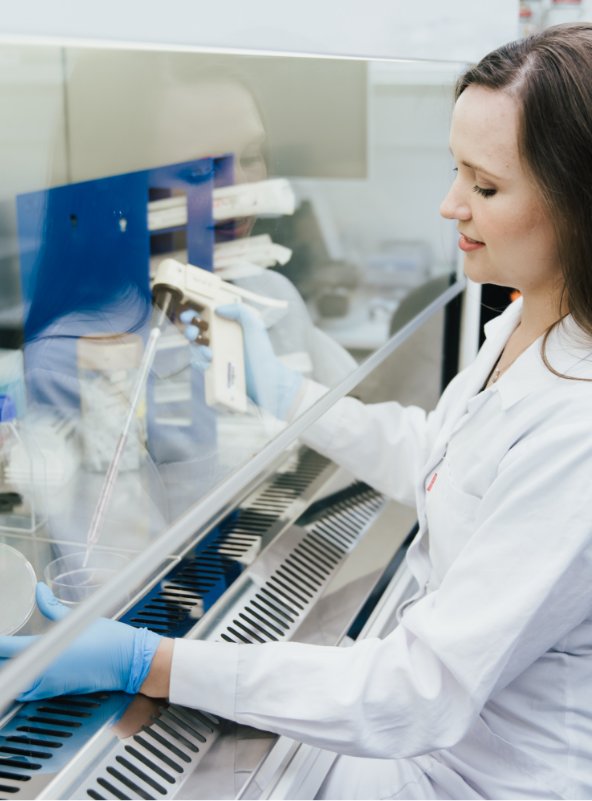
Peel was co-founded in 2015 by Joshua Schiffman, MD, a childhood cancer survivor and pediatric hematologist-oncologist whose research centers on comparative oncology and Li-Fraumeni Syndrome, and Avi Schroeder, PhD, a drug-delivery engineer at the Technion.
One of them had spent years telling families what a treatment would cost them in side effects, hospital days and long-term harm. The other had spent years building ways to get a drug where it needs to go and nowhere else. Peel is what those two problems look like when they are worked on together.
Meet the team →From an observation in nature to a drug in patients.
Both programs are advancing: PEEL-224 is in the clinic, and the elephant p53 work continues.
In the clinic now
PEEL-224 is being tested in adults with colorectal cancer and in children and young adults with solid tumors.
See the pipeline →How we work
“No decision for me without me.”
A cancer therapy should not cost patients the life it is meant to save. Peel was founded by a childhood cancer survivor who became a pediatric oncologist, and treatment burden is treated here as a problem to solve rather than an inevitable consequence of care.
80%
fewer infusion visits than the standard 10-day vincristine, irinotecan and temozolomide (VIT) regimen for relapsed sarcoma patients who reach six months, 64 days returned to families
0
children asked to wait for adult approval: pediatric trials supplied at no charge
-
Listen early
Survivors, advocates and bereaved parents speak to our Board before science, strategy or budgets are discussed.
-
Engineer around burden
Treatment burden is a design input, not a side effect: fewer infusion days, fewer clinic visits, less time away from home.
-
Measure what matters
Tolerability and time returned to families are tracked alongside tumor response.
-
Include patients in priorities
“No decision for me without me” applies to how programs are chosen, not only to how they are run.
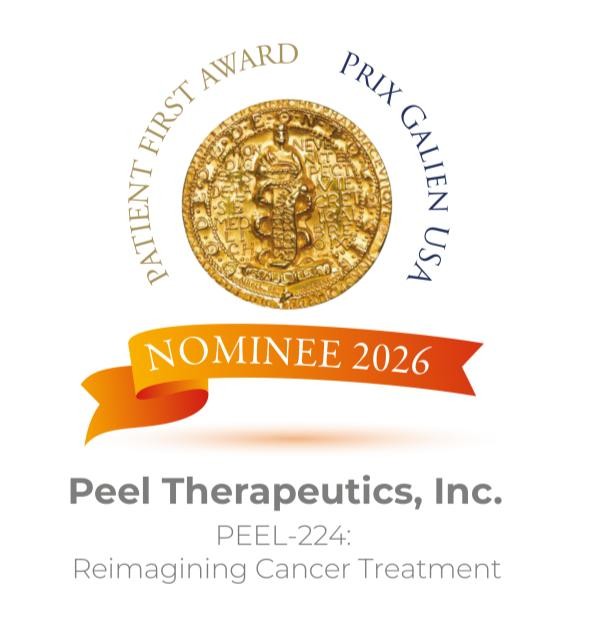
PEEL-224 was named a top 5 finalist for the inaugural 2026 Prix Galien USA Patient First Award, in honor of Michael J. Fox.
A short history.
- 2015 A study of elephant TP53 and cancer resistance, carried out with Li-Fraumeni Syndrome families, is published. Peel Therapeutics is founded the same year.
- 2020 The PEG-[SN22]4 prodrug work is published in Cancer Research, showing long-term remissions in models of drug-resistant neuroblastoma and sarcoma.
- 2022 The first-in-human study of PEEL-224 opens in patients with advanced solid tumors.
- 2025 Investigator-sponsored trials open at Dana-Farber and Children’s Hospital of Philadelphia in pediatric and young-adult solid tumors.
- 2026 PEEL-224 is named a top 5 finalist for the inaugural Prix Galien USA Patient First Award.