
Engineering better cancer medicines.
Validated cancer targets fail on delivery, drug resistance and dose-limiting toxicity. Peel engineers payloads that unlock their full therapeutic potential. Our lead program, PEEL-224, is in clinical trials in adults and children.
 Top 5 finalist · 2026Prix Galien USA Patient First Award
PEEL-224 · lead program
Irinotecan’s mechanism.
Without irinotecan’s limits.
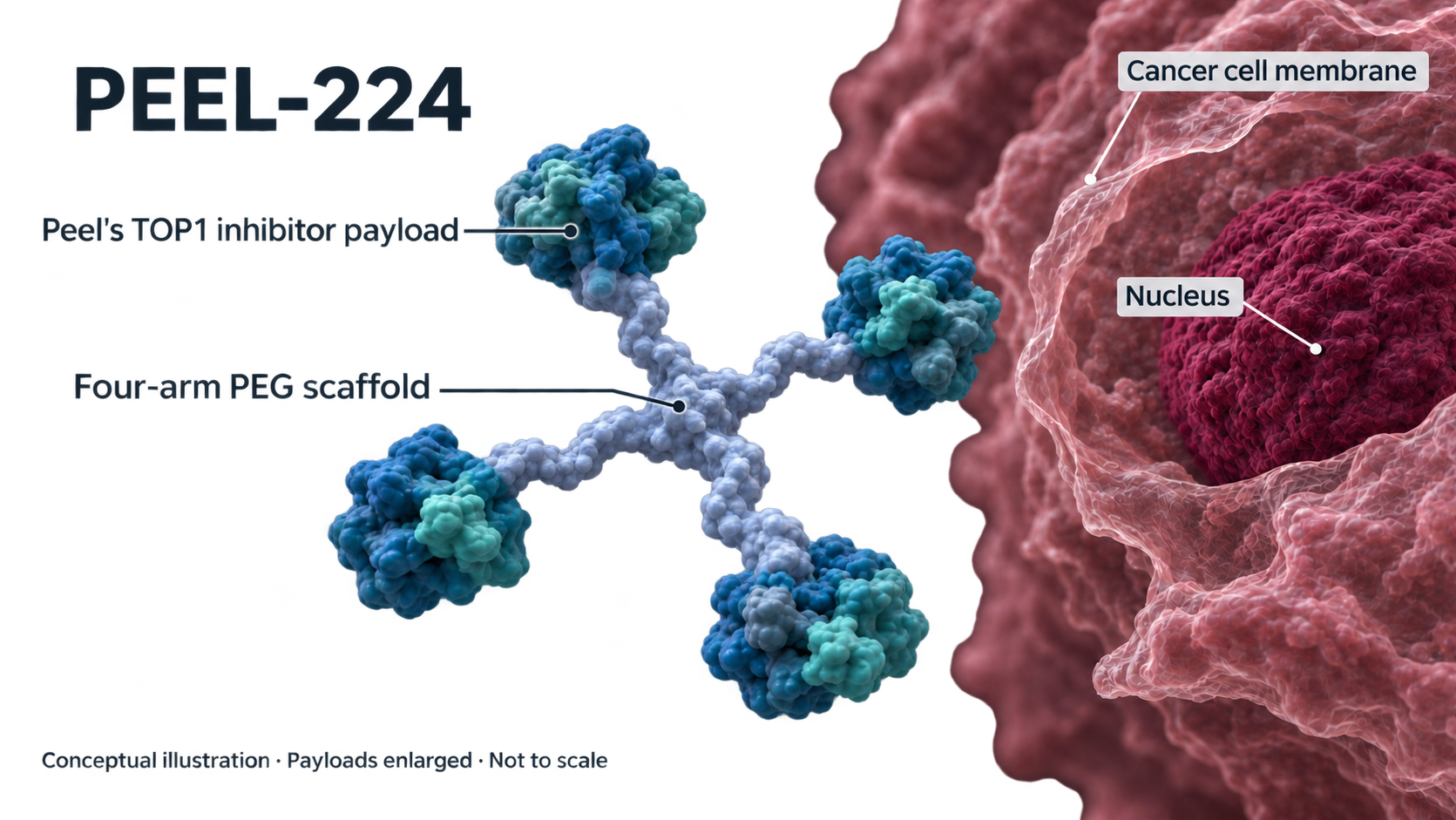
PEEL-224 is a PEGylated prodrug of SN22, a novel camptothecin that evades ABCG2-mediated efflux and UGT1A1 metabolism. Released at the tumor, it is built for the solid tumors that resist today’s TOP1 therapy. With its limited GI toxicity, PEEL-224 is tolerated across multiple combination backbones.
The problem
The right target.
The wrong drug.
Topoisomerase I is one of oncology’s most validated targets, given to patients for more than 30 years. The problem has never been the target. It is the molecule we use to hit it.
Every year around 21 million people are diagnosed with cancer and close to 10 million die of it. Nearly 60% are still treated with traditional cytotoxic chemotherapy, and up to 1.5 million of them receive irinotecan, which remains one of the most widely used backbones in solid-tumor care.
80–90%
of patients on irinotecan-based therapy have experienced treatment failure by twelve months.
Global Cancer Statistics 2024 (American Cancer Society); Frontiers in Pharmacology 2025; Discover Oncology 2025.
Why irinotecan fails
Four problems, none with the target.
Each issue with irinotecan is a property of the molecule and the way it interacts with the tumor, which means each challenge can be engineered out.
-
It has to be activated by the liver
Irinotecan is a prodrug. Hepatic carboxylesterases must convert it to SN38, and only a small fraction of that active drug ever reaches the tumor.
-
Tumors pump it straight back out
SN38 is a substrate for ABCG2 and other ABC transporters. The tumors in need of treatment expel the active metabolite so it stops working.
-
The gut turns it back on in the wrong place
SN38 is deactivated by UGT1A1, then reactivated by bacterial β-glucuronidase in the intestine, which is what drives the severe, dose-limiting diarrhea.
-
Dose is capped by toxicity, not by target
Between the diarrhea and the bone-marrow suppression, patients are rarely dosed to the level the target actually requires.
How Peel technology delivers its TOP1 inhibitor
An investigational PEG prodrug with patented linker technology designed to sustain exposure to its active payload, SN22.
01 / IV infusion
Administer the prodrug
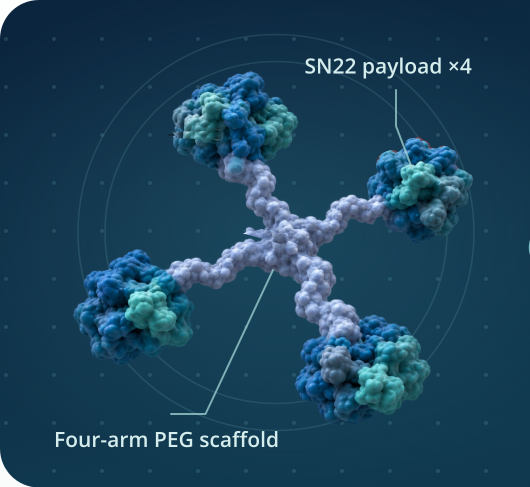
Each PEEL-224 molecule carries up to four separate SN22 payloads on a single PEG scaffold.
02 / Circulation
Extend circulation
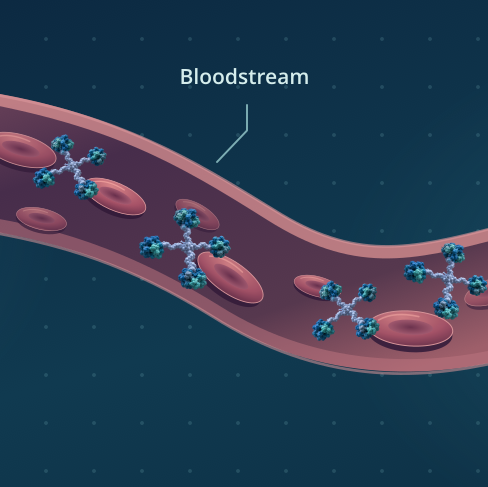
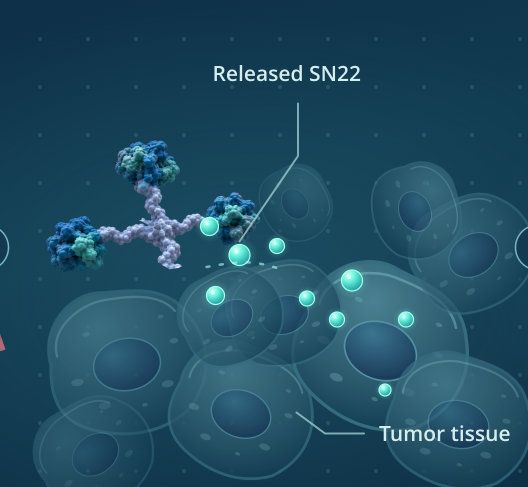
The PEG carrier prolongs circulation. SN22 is inactive while attached and is gradually released.
03 / Tumor exposure
Sustain tumor exposure
When it reaches the tumor bed, the enhanced permeability and retention (EPR) effect combined with ABCG2 resistance led to over hundredfold intratumoral levels of SN22 in a neuroblastoma mouse model vs. SN38 from irinotecan at 4, 24 and 72 h.1
04 / Inside the cell
Trap TOP1 on DNA
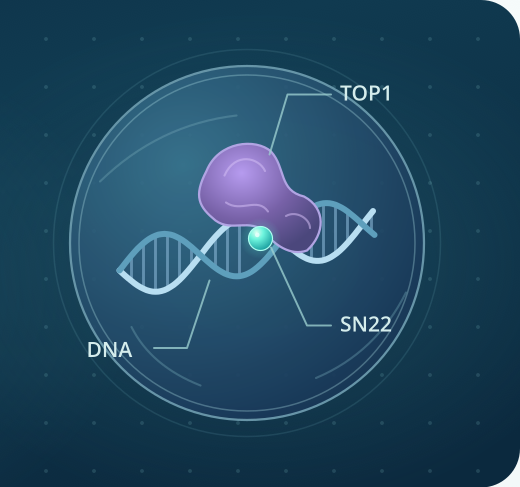
Released SN22 stabilizes TOP1–DNA cleavage complexes, leading to DNA breaks during replication and tumor cell death.1
Resists ABCG2-mediated drug efflux
Drug resistance. SN22 retained activity in neuroblastoma cells with high levels of ABCG2, a pump that can export SN38.1
Bypasses UGT1A1 glucuronidation
Drug metabolism. SN22 bypasses the SN38 glucuronidation and gut reactivation pathway that contributes to irinotecan’s delayed diarrhea.1, 2
Mechanism schematic · Payloads enlarged · Illustrations not to scale · Patent protection through 2039
1 Nguyen et al., Cancer Res. 2020;80:4258–4266. 2 Parvez et al., Drug Metab Dispos. 2021;49:683–693.
PEEL-224 · Investigational
Reimagining Cancer Treatment: what changes, point by point.
Same validated mechanism. A different molecule, and a different route to the tumor.
01
Less drug resistance
SN22 resists MDR transporter efflux, the mechanism that turns proven drugs into failed ones.
02
Less GI toxicity
PEEL-224 avoids the intestinal reabsorption that drives irinotecan’s dose-limiting diarrhea.
03
Better tumor delivery
The payload is released systemically and also cleaved at the tumor site rather than switched on in the liver.
04
Better bioavailability
The PEG carrier extends systemic exposure, so the tumor sees the drug for longer.
Pharmacokinetic and mechanistic comparisons from Nguyen et al., Cancer Research 2020 (doi:10.1158/0008-5472.CAN-20-1344) and Peel Therapeutics data. PEEL-224 is investigational and has not been compared with irinotecan in a head-to-head clinical trial.
Durable responses in models where irinotecan fails.
In work led at Children’s Hospital of Philadelphia, SN22 inhibited tumor-cell growth regardless of ABCG2 expression, and PEG-[SN22]4 kept intratumoral drug levels far above SN38 at every time point.
6+ months
complete tumor regression in spontaneous TH-MYCN neuroblastoma, tumor-free at necropsy
80–100%
of neuroblastoma and sarcoma xenografts in long-term remission
14 of 14
preclinical tumor models responded, including an irinotecan-resistant line
Head-to-head with irinotecan and liposomal irinotecan
Every comparator arm reached endpoint. Every PEEL-224 mouse was alive at the end of follow-up.
Spontaneous neuroblastoma
TH-MYCN transgenic mice · all arms once weekly × 4
| Arm | Median survival |
|---|---|
| PEEL-224 | Not reached |
| Liposomal irinotecan | ~54 days |
| Irinotecan | ~19 days |
| No treatment | ~22 days |
Neuroblastoma patient-derived xenograft
COG-N-415x · all arms once weekly × 4
| Arm | Median survival |
|---|---|
| PEEL-224 | Not reached |
| Liposomal irinotecan | ~78 days |
| Irinotecan | ~45 days |
| No treatment | ~9 days |
Across pediatric and adult tumors
PEEL-224 versus irinotecan at matched schedules (q7d × 4, last dose day 21) in six tumor types.
Day 190: PEEL-224 100% · irinotecan 0%
Day 200: PEEL-224 100% · irinotecan 0%
Day 200: PEEL-224 67% · irinotecan 0%
Day 49: PEEL-224 100% · irinotecan 71%
Day 65: PEEL-224 100% · irinotecan 29%
Day 50: PEEL-224 100% · irinotecan 40%
Tumors cleared, and stayed cleared
Weekly bioluminescence imaging of chemoresistant, luciferase-tagged SK-N-BE(2)C neuroblastoma implanted in the perirenal fat pad. Vehicle, blank PEG and free CPT-11 tumors grew to endpoint by week 2. PEG-[SN38]4 tumors regressed, then regrew. PEG-[SN22]4, the research designation for PEEL-224, cleared the signal by week 3 and it did not return.
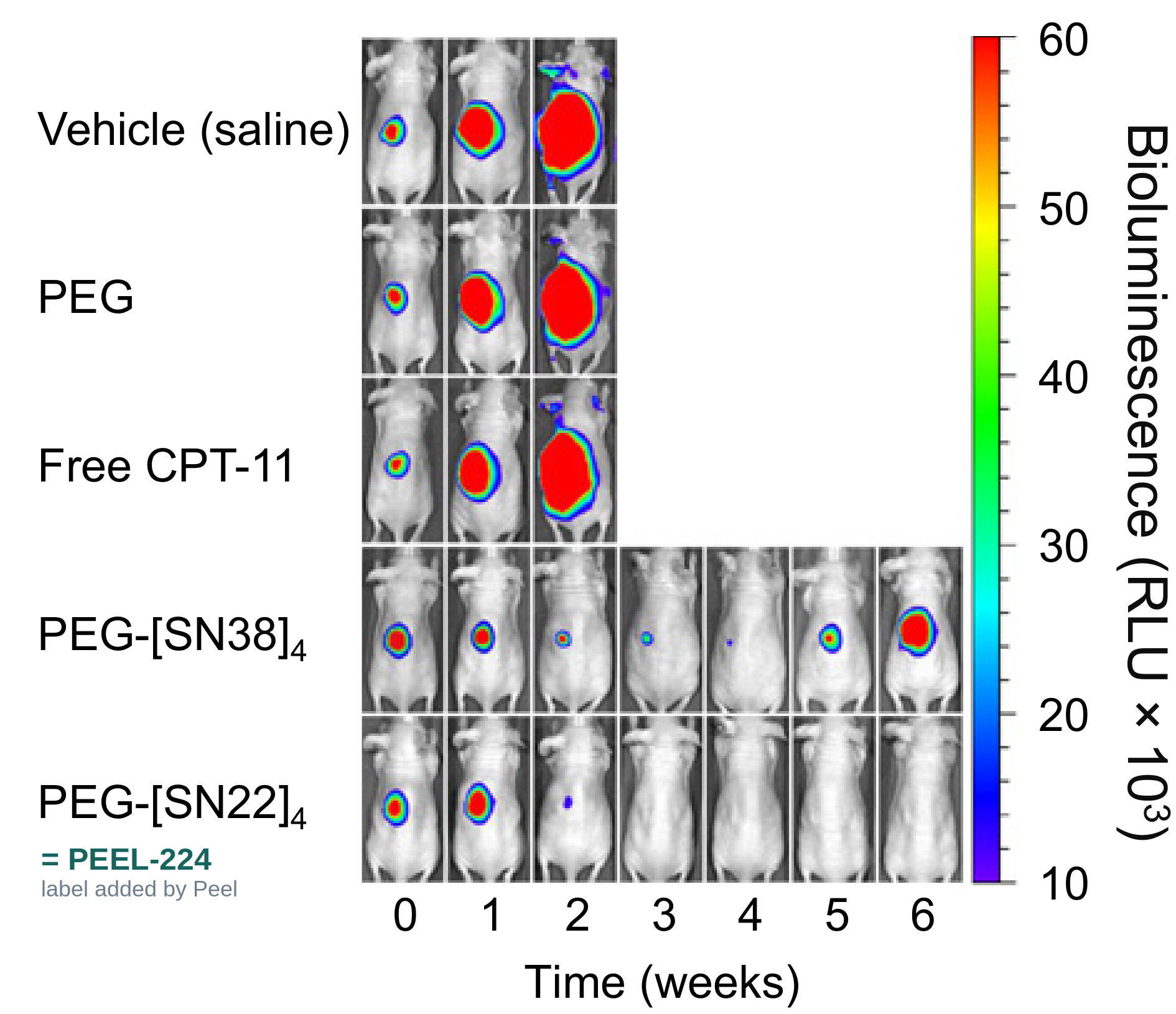
Figure 3, reproduced from Nguyen et al., Cancer Research 2020;80(19):4258–65, with the PEEL-224 name added to the PEG-[SN22]4 row. Five mice per group, dosed once weekly for four weeks.
Active in all 14 models tested
Flank, orthotopic, spontaneous, pseudometastatic and patient-derived models across pediatric and adult tumors.
- Gastric flank xenograft · MKN45
- Pancreatic flank xenograft · BxPC3
- Colorectal flank xenograft · HT-29*
- Colorectal syngeneic allograft · MC38†
- Rhabdomyosarcoma flank xenograft · Rh30
- Ewing sarcoma flank xenograft · TC-71, TC-32
- Neuroblastoma spontaneous · TH-MYCN
- Neuroblastoma patient-derived xenograft · COG-N-415x
- Neuroblastoma pseudometastatic · TH-MYCN
- Neuroblastoma orthotopic xenograft · SK-N-BE(2)C
- Neuroblastoma flank xenograft · SH-SY5Y
- Osteosarcoma orthotopic xenograft · 143B
- DSRCT flank xenograft · MSKSAR-28381
- Glioblastoma flank xenograft · LN229
*Also used to derive an irinotecan-resistant model in vivo, which remained sensitive to PEEL-224. †Syngeneic model used to test PEEL-224 with immunotherapy.
Survival curves are redrawn from Peel Therapeutics data and Nguyen F, et al. Structural optimization and enhanced prodrug-mediated delivery overcomes camptothecin resistance in high-risk solid tumors. Cancer Research 2020;80(19):4258–65. doi:10.1158/0008-5472.CAN-20-1344. Median survival values are read from the curves.
Peel’s broader pipeline.
PEEL-224 is in the clinic across five solid-tumor settings with leading cancer centers. Behind it, the same PEG platform carries new payloads.

PEEL-224
PEGylated TOP1 inhibitor

 *
 *



PEEL-788
NET-targeted TOP1 inhibitor

Multiple PEGylated combinations
Interchangeable payloads in proprietary combinations for cancer targets
Patient first
“No decision for me without me.”
Survivors, advocates and bereaved parents speak to our Board before science, strategy or budgets are discussed. We engineer around patient burden and measure what matters to families. Read our story →
80%
fewer infusion visits than the standard 10-day vincristine, irinotecan and temozolomide (VIT) regimen for relapsed sarcoma patients who reach six months, 64 days returned to families
0
children asked to wait for adult approval: pediatric trials supplied at no charge
PEEL-224 named a top 5 finalist for the inaugural 2026 Prix Galien USA Patient First Award
Read the news →The people behind PEEL-224.
Physician-scientists, drug developers and operators from industry, academia and clinical medicine.
Leadership

CEO & Co-Founder

Chief Business Officer

SVP, Corporate Development

Chief Financial Officer
Board of directors

Chairman
CEO, Co-Founder, Director

Co-Founder, Director

Director

Director

Director

Director, in memoriam
Advisors

Advisor

Advisor

Advisor

Advisor

Advisor

Advisor
Oct 2026 · Recognition
PEEL-224 named a top 5 finalist for the inaugural Prix Galien USA Patient First Award, in honor of Michael J. Fox.
The award recognizes therapies developed with patients at the center. Announced at the Galien Patient Summit, 29 October 2026.
Press releases
- Sep 2026The Galien Foundation announces nominees for the inaugural 2026 Prix Galien Patient First Award in honor of Michael J. Fox, including PEEL-224
- Nov 2023Peel Therapeutics to present data on its TOP1 inhibitor PEEL-224 at the Connective Tissue Oncology Society and Society for Immunotherapy of Cancer annual meetings
- Apr 2023Peel Therapeutics reports excessive NETosis induction in long COVID
- Feb 2023Peel Therapeutics closes new financing round and expands Board of Directors to support evolution-based medicines for cancer and inflammation
- Aug 2022Peel Therapeutics initiates clinical trial of PEEL-224 in patients with advanced solid tumors
- Aug 2020Peel Therapeutics developing cancer drug from plant toxin
- Jun 2020Peel Therapeutics announces possible new treatment for COVID-19
In the news
Coverage of Peel, PEEL-224 and the evolutionary biology behind them, 2015 to today.
Featured in

















- BioHive · Jun 2025From physician to biotech pioneer: how Dr. Joshua Schiffman is reimagining cancer treatment
- Good Medicine Podcast · May 2025Treating cancer with Dr. Joshua Schiffman
- Drug Discovery News · Jul 2024From wildlife to bedside: nature’s wisdom meets modern medicine
- Altitude Lab · May 2023Altitude Lab relocates to Gateway’s BioHive hub
- In Vivo · Apr 2023Peel Therapeutics: from elephants, trees and honeybees to cancer therapeutics
- Empowered Patient Podcast · Apr 2023Engineering a plant toxin to cause tumors to self-destruct
- CBS News · Feb 2023Studying nature’s secrets, and animals’ medical superpowers
- Q&A · Feb 2023Three questions with Peel Therapeutics’ Joshua Schiffman
- Institute of Cancer Research · Feb 2023Why elephants rarely get cancer, and how evolution is helping unlock nature’s potential
- Altitude Lab · Jan 2023People’s Choice Award winner, Altitude Lab Demo Day
- TWiPO · Dec 2022Nanotechnology for pediatric cancer with Dr. Joshua Schiffman
- Thermo Fisher · Aug 2022Biotech Innovators podcast
- University of Utah Health · Apr 2022Preventing web-like NETs from clogging blood vessels could improve stroke outcomes
- KPCW Cool Science Radio · Apr 2022Fighting cancer with the help of elephants
- Yahoo · Mar 2022Altitude Lab announces first cohort of startups closing over $50M in seed capital
- Utah Business · Mar 2022Peel Therapeutics studies the evolution of elephants to help cure cancer
- Disruptive BioTalk · Apr 2021Peel Therapeutics
- BioSpace · Aug 2020Peel Therapeutics preps IND for prodrug targeting chemoresistant tumors
- OsteoBites · May 2020Peel Therapeutics on OsteoBites
- The Algemeiner · Jan 2020Technion researcher seeks to cure cancer, and a shrimp plague
- BioSpace · Jun 2017Elephants rarely get cancer, and why that’s good news for pet owners and us
- StartUp Health NOW · May 2017Peel Therapeutics on StartUp Health NOW
- Brown Medicine · Oct 2016Think big
- Newsweek · Oct 2015Why elephants don’t get cancer, and what that means for humans
Contact
For partnering, trial sites, media and general enquiries. We reply to every message.
Business development
Partnering, licensing and diligence.
Ajay Rai, Chief Business Officer
Clinical trials
Site enquiries and eligibility questions from clinicians.
Current studies on ClinicalTrials.gov
Media
Interviews, data and imagery requests.
Office
Salt Lake City, Utah
Member of BioHive